วันจันทร์ที่ 16 กรกฎาคม พ.ศ. 2555

Manual of Nerve Conduction Studies, Second Edition

Manual of Nerve Conduction Studies, Second Edition Review


Buy From Amazon.com


This second edition continues to offer practitioners access to a huge database of normal values, developed using the most modern scientific protocols, for virtually any patient population! Normal ranges take into account age, sex, height, and body mass index for a wide range of demographic groups to provide a complete set of reliable values for everyday clinical practice. Many studies are updated. When possible, studies with normal values based on larger groups of subjects with varied demographics are included. Side-to-side and same-limb comparisons of different nerves are often included, with the acceptable differences listed in the “helpful hints” section of the appropriate chapters. Included for reference is a schematic of the brachial plexus inside the front cover, to be used as an aid in determining which nerves to study in complex cases. Benefits of this outstanding reference: Provides reliable, state-of-the-art normal ranges; Results are presented with the mean, standard deviation, the range, and the upper or lower limit of normal; Covers up-to-date techniques for conducting nerve tests; Provides written descriptions and schematic depictions of electrode placement; Includes typical waveform appearance of the most common studies; Codifies the acceptable differences in latency, amplitude, nerve conduction velocity, etc., between nerves of the same or opposite limbs, allowing for a more precise diagnosis; Offers a concise list of references and suggested readings for each study; Provides helpful hints for performing each study; Includes advantages and pitfalls of alternative techniques This bedside reference offers a comprehensive, up-to-date set of normal values for clinical use that can be used to quickly review how to perform a given study or to look up reference values that have not been committed to memory. By following the described techniques, the user-trainee or clinician-will have normal values that can be used with confidence.


Buy From Amazon.com

Anatomic Localization for Needle EMG, 2e

Anatomic Localization for Needle EMG, 2e Review


Buy From Amazon.com


The new edition of this practical text presents a clear anatomic approach to locating the needle insertion site for EMG. Succinct descriptions are provided for 71 routinely tested muscles, and each is accompanied by a full-page drawing of the muscle and related anatomy. Many new cross-sectional drawings have been added to further delineate the anatomy. Guidelines have been expanded throughout to include more detail. There are also more pearls, additional tips on avoiding pitfalls, and anatomical and clinical descriptions. Teaching points have been expanded and replace the previous "notes" from the first edition. The text is in outline format and indicates peripheral and nerve root innervations and patient positioning.


Buy From Amazon.com

วันอาทิตย์ที่ 15 กรกฎาคม พ.ศ. 2555

Electromyography in Clinical Practice: A Case Study Approach, 2e

Electromyography in Clinical Practice: A Case Study Approach, 2e Review


Buy From Amazon.com


The only case-based guide to electromyography-back in a fully revised and updated New Edition! This practical resource examines how to approach, diagnose, and manage the most commonly encoun-tered disorders in the EMG laboratory. Based on actual cases, it correlates patient history, physical exam, EMG findings, relevant anatomy, treatment, and follow-up to help readers sharpen their clinical problem-solving skills. New cases have been added, and every case includes the latest advances in knowledge and technique.
  • Features study questions, answers, and clinical discussions of how experts manage cases to help readers work through the problems presented.
  • Summarizes the results of nerve conduction studies and EMG data with standardized tables.
  • Includes more than 200 relevant imaging studies and anatomic figures.
  • Makes information easy to find with a uniform chapter organization.
  • Offers a consistent approach to electromyography based on Dr. Katirji's broad knowledge and clinical experience.
  • 7 new case studies, including Hereditary Neuropathy with Liability to Pressure Palsy, Ischemic Monomelic Neuropathy, and Myotonic Dystrophy.
  • Three new chapters on Nerve Conduction Studies, Needle EMG Examination, and Specialized Procedures.
  • Many new and revised figures that clarify complex information.


Buy From Amazon.com

วันเสาร์ที่ 14 กรกฎาคม พ.ศ. 2555

EMG Secrets, 1e

EMG Secrets, 1e Review


Buy From Amazon.com


From the highly popular Secrets Series® comes the succinct, practical electromyography book that practitioners have been waiting for. Major authorities in the field present a series of key questions and answers in areas of importance in EMG, featuring the additional tips, pearls, and "secrets" that are the hallmark of the series. Major sections include Anatomy and Physiology, Instrumentation, Nerve Conduction Studies, Electromyography, Specific Diseases, and Interpretation of Results.
  • All the most important "need-to-know" questions-and-answers in the proven format of the highly acclaimed Secrets Series®

  • Concise answers that include the author's pearls, tips, memory aids, and "secrets"

  • Bulleted lists, algorithms, and illustrations for quick review

  • Thorough, highly detailed index

  • Thought-provoking questions that provide succinct answers
  • Presentation of a vast amount of information


Buy From Amazon.com

วันพุธที่ 11 กรกฎาคม พ.ศ. 2555

Assessment and Treatment of Muscle Imbalance:The Janda Approach

Assessment and Treatment of Muscle Imbalance:The Janda Approach Review


Assessment and Treatment of Muscle Imbalance:The Janda Approach


Assessment and Treatment of Muscle Imbalance:The Janda Approach Feature


  • in small improvements in performance.Part III, Intervention of Underrecovery,” focuses on the significance of correct competitive scheduling & training sequencing, which together underscore the processes leading to optimal performance. Emotional & mental factors in underrecovery & overtraining are also discussed.Part IV, Transfer to Related Areas,” examines the relationship between recovery & both physical & psychological health. The importance of attitudes, beliefs, & perceptions ar
  • e also addressed.Addressing recovery as a key factor of performance, the text illustrates how a constant lack of recovery can result in overtraining in athletes you work with. Further, it shows how being even slightly underrecovered over an extended period results in underperformance in athletes & nonathletes alike. Enhancing Recovery: Preventing Underperformance in Athletes is a critical resource for anyone researching or practicing in the exercise science field.author: Page, Phillip Pages: 312
  • SHK01513


Assessment and Treatment of Muscle Imbalance: The Janda Approach blends postural techniques, neurology, and functional capabilities in order to alleviate chronic musculoskeletal pain and promote greater functionality. Developed by Vladimir Janda, respected neurologist and physiotherapist , the Janda approach presents a unique perspective to rehabilitation. In contrast to a more traditional structural view, the Janda approach is functional—emphasizing the importance of the sensorimotor system in controlling movement and chronic musculoskeletal pain syndromes from sports and general activities. Assessment and Treatment of Muscle Imbalance: The Janda Approach is the only text to offer practical, evidence-based application of Janda’s theories.


Filled with illustrations, photos, and step-by-step instructions, Assessment and Treatment of Muscle Imbalance uses a systematic approach in presenting information that can be used in tandem with other clinical techniques. This resource for practitioners features the following tools:

--A rationale for rehabilitation of the musculoskeletal sytem based on the relationship between the central nervous system and the motor system --A systematic method for the functional examination of the muscular system --Treatment processes focusing on the triad of normalization of peripheral structures, restoration of muscle balance, and facilitation of afferent systems and sensorimotor training --The role of muscle imbalance and functional pathology of sensorimotor systems for specific pain complaints, including cervical pain syndrome, upper- and lower-extremity pain syndromes, and low back pain syndromes


Assessment and Treatment of Muscle Imbalance provides an evidence-based explanation of muscle imbalance. The step-by-step Janda system of evaluation is explained—including analysis of posture, balance, and gait; evaluation of movement patterns; testing of muscle length; and assessment of the soft tissue. The text explores treatment options for muscle imbalance through facilitation and inhibition techniques and sensorimotor training to restore neuromsucular function. It also includes four case studies examining musculoskeletal conditions and showing how the Janda approach compares with other treatments. This text combines theory, evidence, and applications to assist clinicians in implementing the Janda approach into their practice.


Assessment and Treatment of Muscle Imbalance: The Janda Approach focuses on the neurological aspects of muscle imbalance that are common causes of pain and dysfunction in sports and occupational activities. By distilling the scientific works of Vladimir Janda into a practical, systematic approach, this unique resource will assist health care providers in treating patients with musculoskeletal complaints as well as exercise professionals in developing appropriate exercise prescription and training programs.


วันอังคารที่ 10 กรกฎาคม พ.ศ. 2555

Low Back Disorders, Second Edition

Low Back Disorders, Second Edition Review
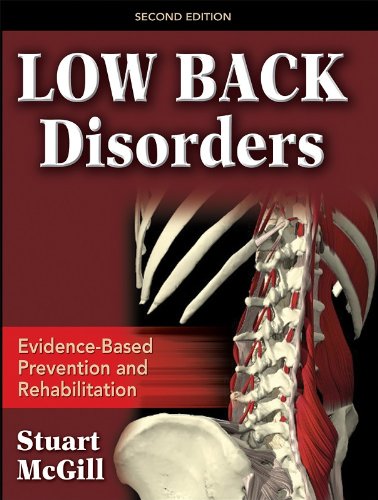

Low Back Disorders, Second Edition


Low Back Disorders, Second Edition Feature


  • Author(s): Stuart Mcgill
  • Published: 8-13-2007
  • SHK00903


Access the latest research and applications to build effective prevention and rehabilitation programs for your patients or clients with Low Back Disorders: Evidence-Based Prevention and Rehabilitation, Second Edition. Internationally recognized low back specialist Stuart McGill presents original research to quantify the forces that specific movements and exercises impose on the low back, dispels myths regarding spine stabilization exercises, and suggests prevention approaches and strategies to offset injuries and restore function.

Low Back Disorders: Evidence-Based Prevention and Rehabilitation, Second Edition,
presents a clear exposition of back anatomy and biomechanics and demonstrates how to interpret the latest research on low back involvement for clinical applications. The text also contains detailed information on injuries associated with seated work and sport and ergonomic issues related to manual handling of materials. With Low Back Disorders: Evidence-Based Prevention and Rehabilitation, Second Edition, you will

-gain valuable information on measured loading of the back during specific activities and apply it to avoid common—but counterproductive—practices in back rehabilitation;

-learn how to analyze each patient's or client's unique physical characteristics and lifestyle factors to tailor preventive measures and treatments to individual needs;

-learn how to help patients and clients progress through the stages of rehabilitation: corrective exercise, stability or mobility, endurance, and strength; and

-acquire the information necessary to design an effective injury-prevention program.
This fully updated second edition expands knowledge of low back disorders and best practices in several areas. Enhanced algorithms guide progessive therapeutic exercise, and specially designed patient assessment provocation tests aid you in determining the cause of back troubles, guide your choices in the best ways to eliminate problems, and improve the development of appropriate activities for functional gain. Whereas the first edition focused on increasing spine stability, the second edition provides new information on dealing with both regional instability or mobility and regional stiffness present in individuals where most of the motion occurs at a single spinal segment.

With an expanded repertoire of pain-free motion exercises and additional information on ways to find and adjust stabilization exercises, Low Back Disorders: Evidence-Based Prevention and Rehabilitation, Second Edition, offers you new tools to help your patients and clients achieve pain-free exertion.

The text includes exercises and activities that provide a solid foundation of physical work in preparation for more advanced activities in sports and occupations. Also, the process of transitioning into performance exercise is outlined with an explanation of the critical stages of the performance pyramid, including the design of appropriate corrective exercise, building joint and whole-body stability, enhancing endurance, training true strength, and transitioning to ultimate performance.

Low Back Disorders: Evidence-Based Prevention and Rehabilitation, Second Edition,
presents foundational information and corresponding clinical applications in a clear, well-sequenced format. Part I builds your knowledge of lumbar function and injury. Part II demonstrates how to use this knowledge to build evidence-based injury-prevention programs by assessing risks, creating ergonomic interventions, and training personnel. Part III focuses on improving rehabilitation techniques, including specific diagnostic and provocative tests, with specific therapeutic exercises proven to enhance performance and reduce pain through a continuum from corrective exercise to stability and mobility, endurance, strength, and power.

Additionally, the text offers these practical features to guide your learning and inform your practice:

-More than 475 photos, graphs, and charts support the research and the scientific basis for the text's conclusions.

-More than 50 tests and exercises with step-by-step instructions help you develop successful programs for your patients and clients.

-Special sections highlight how the anatomical, biomechanical, and research results can be applied to clinical situations.

-Extensive discussions on individualizing treatment for clients or patients help you improve your assessment skills by learning what questions to ask and what avenues of investigation to pursue with each patient or client.

-Reproducible handout sheets for each of the 25 basic rehabilitation exercises, which include photos and blank lines for instructions, enable the creation of instruction sheets tailored to the current needs and progress rates of each patient or client.
Cutting-edge research and evidence-based application strategies from the leading spine specialist in North America make Low Back Disorders: Evidence-Based Prevention and Rehabilitation, Second Edition, the authoritative text for study, care, and treatment of the low back. Its unique approach to back care will guide you in developing intervention, rehabilitation, and prevention programs to address the unique needs of each patient or client and develop a strong scientific foundation for your practice.




วันจันทร์ที่ 9 กรกฎาคม พ.ศ. 2555

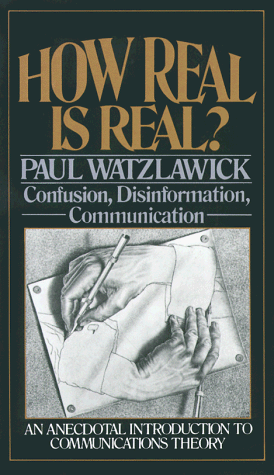
How Real Is Real?

How Real Is Real? Review


How Real Is Real?


The connection between communication and reality is a relatively new idea. It is only in recent decades that the confusions, disorientations and very different world views that arise as a result of communication have become an independent field of research. One of the experts who has been working in this field is Dr. Paul Watzlawick, and he here presents, in a series of arresting and sometimes very funny examples, some of the findings.