แสดงบทความที่มีป้ายกำกับ Edition แสดงบทความทั้งหมด

วันจันทร์ที่ 16 กรกฎาคม พ.ศ. 2555

Manual of Nerve Conduction Studies, Second Edition

Manual of Nerve Conduction Studies, Second Edition Review


Buy From Amazon.com


This second edition continues to offer practitioners access to a huge database of normal values, developed using the most modern scientific protocols, for virtually any patient population! Normal ranges take into account age, sex, height, and body mass index for a wide range of demographic groups to provide a complete set of reliable values for everyday clinical practice. Many studies are updated. When possible, studies with normal values based on larger groups of subjects with varied demographics are included. Side-to-side and same-limb comparisons of different nerves are often included, with the acceptable differences listed in the “helpful hints” section of the appropriate chapters. Included for reference is a schematic of the brachial plexus inside the front cover, to be used as an aid in determining which nerves to study in complex cases. Benefits of this outstanding reference: Provides reliable, state-of-the-art normal ranges; Results are presented with the mean, standard deviation, the range, and the upper or lower limit of normal; Covers up-to-date techniques for conducting nerve tests; Provides written descriptions and schematic depictions of electrode placement; Includes typical waveform appearance of the most common studies; Codifies the acceptable differences in latency, amplitude, nerve conduction velocity, etc., between nerves of the same or opposite limbs, allowing for a more precise diagnosis; Offers a concise list of references and suggested readings for each study; Provides helpful hints for performing each study; Includes advantages and pitfalls of alternative techniques This bedside reference offers a comprehensive, up-to-date set of normal values for clinical use that can be used to quickly review how to perform a given study or to look up reference values that have not been committed to memory. By following the described techniques, the user-trainee or clinician-will have normal values that can be used with confidence.


Buy From Amazon.com

วันอังคารที่ 10 กรกฎาคม พ.ศ. 2555

Low Back Disorders, Second Edition

Low Back Disorders, Second Edition Review
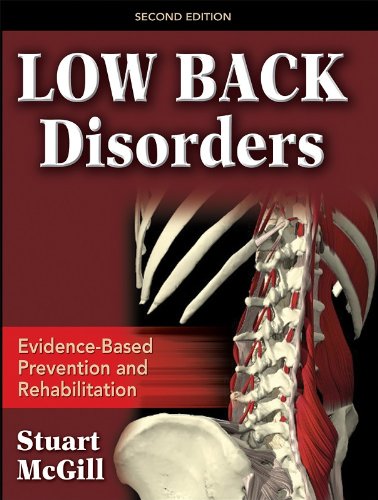

Low Back Disorders, Second Edition


Low Back Disorders, Second Edition Feature


  • Author(s): Stuart Mcgill
  • Published: 8-13-2007
  • SHK00903


Access the latest research and applications to build effective prevention and rehabilitation programs for your patients or clients with Low Back Disorders: Evidence-Based Prevention and Rehabilitation, Second Edition. Internationally recognized low back specialist Stuart McGill presents original research to quantify the forces that specific movements and exercises impose on the low back, dispels myths regarding spine stabilization exercises, and suggests prevention approaches and strategies to offset injuries and restore function.

Low Back Disorders: Evidence-Based Prevention and Rehabilitation, Second Edition,
presents a clear exposition of back anatomy and biomechanics and demonstrates how to interpret the latest research on low back involvement for clinical applications. The text also contains detailed information on injuries associated with seated work and sport and ergonomic issues related to manual handling of materials. With Low Back Disorders: Evidence-Based Prevention and Rehabilitation, Second Edition, you will

-gain valuable information on measured loading of the back during specific activities and apply it to avoid common—but counterproductive—practices in back rehabilitation;

-learn how to analyze each patient's or client's unique physical characteristics and lifestyle factors to tailor preventive measures and treatments to individual needs;

-learn how to help patients and clients progress through the stages of rehabilitation: corrective exercise, stability or mobility, endurance, and strength; and

-acquire the information necessary to design an effective injury-prevention program.
This fully updated second edition expands knowledge of low back disorders and best practices in several areas. Enhanced algorithms guide progessive therapeutic exercise, and specially designed patient assessment provocation tests aid you in determining the cause of back troubles, guide your choices in the best ways to eliminate problems, and improve the development of appropriate activities for functional gain. Whereas the first edition focused on increasing spine stability, the second edition provides new information on dealing with both regional instability or mobility and regional stiffness present in individuals where most of the motion occurs at a single spinal segment.

With an expanded repertoire of pain-free motion exercises and additional information on ways to find and adjust stabilization exercises, Low Back Disorders: Evidence-Based Prevention and Rehabilitation, Second Edition, offers you new tools to help your patients and clients achieve pain-free exertion.

The text includes exercises and activities that provide a solid foundation of physical work in preparation for more advanced activities in sports and occupations. Also, the process of transitioning into performance exercise is outlined with an explanation of the critical stages of the performance pyramid, including the design of appropriate corrective exercise, building joint and whole-body stability, enhancing endurance, training true strength, and transitioning to ultimate performance.

Low Back Disorders: Evidence-Based Prevention and Rehabilitation, Second Edition,
presents foundational information and corresponding clinical applications in a clear, well-sequenced format. Part I builds your knowledge of lumbar function and injury. Part II demonstrates how to use this knowledge to build evidence-based injury-prevention programs by assessing risks, creating ergonomic interventions, and training personnel. Part III focuses on improving rehabilitation techniques, including specific diagnostic and provocative tests, with specific therapeutic exercises proven to enhance performance and reduce pain through a continuum from corrective exercise to stability and mobility, endurance, strength, and power.

Additionally, the text offers these practical features to guide your learning and inform your practice:

-More than 475 photos, graphs, and charts support the research and the scientific basis for the text's conclusions.

-More than 50 tests and exercises with step-by-step instructions help you develop successful programs for your patients and clients.

-Special sections highlight how the anatomical, biomechanical, and research results can be applied to clinical situations.

-Extensive discussions on individualizing treatment for clients or patients help you improve your assessment skills by learning what questions to ask and what avenues of investigation to pursue with each patient or client.

-Reproducible handout sheets for each of the 25 basic rehabilitation exercises, which include photos and blank lines for instructions, enable the creation of instruction sheets tailored to the current needs and progress rates of each patient or client.
Cutting-edge research and evidence-based application strategies from the leading spine specialist in North America make Low Back Disorders: Evidence-Based Prevention and Rehabilitation, Second Edition, the authoritative text for study, care, and treatment of the low back. Its unique approach to back care will guide you in developing intervention, rehabilitation, and prevention programs to address the unique needs of each patient or client and develop a strong scientific foundation for your practice.




วันพุธที่ 4 กรกฎาคม พ.ศ. 2555

EMG-Messungen bei Nervus Plexus Läsionen: Auswirkung einer Muskel-Sehnen-Transplantation (German Edition)

EMG-Messungen bei Nervus Plexus Läsionen: Auswirkung einer Muskel-Sehnen-Transplantation (German Edition) Review


EMG-Messungen bei Nervus Plexus Läsionen: Auswirkung einer Muskel-Sehnen-Transplantation (German Edition)


Jedes Jahr ereignen sich in Deutschland zwischen 1000 und 1500 Nervus Plexus Läsionen. Diese werden v.a. durch Motorradunfälle verursachte Traumata hervorgerufen. Die Auswirkungen sind oft schwerwiegend und reichen von Funktionsausfällen mehrerer Gelenke und sensiblen und motorischen Störungen bis hin zu vollständigen Lähmungen der betroffenen oberen Extremität. Die Therapie und Rehabilitation gestaltet sich langwierig und komplex. Zudem fehlt es sowohl seitens operativer als auch konservativer Therapien an einheitlichen Behandlungskonzepten. Darüber hinaus zeigt sich die Verlaufsbeobachtung nach erfolgter Intervention im klinischen und rehabilitativen Alltag sehr defizitär. In der vorliegenden Studie wird die Auswirkung einer Muskel-Sehnen-Transplantation bei einer Nervus Plexus Läsion untersucht und hinterfragt, inwieweit eine solche Transplantation die neuromuskuläre Ansteuerung des M. biceps brachii verbessert. Der Untersuchung dienen zwei Personen mit einer Nervus Plexus Läsion als Probandengut. Die eine Person wurde präoperativ, ohne sekundäre Ersatzoperation, die andere postoperativ, nach einem freien funktionellen Muskeltransfer des M. gracilis dexter als M. biceps-Ersatz untersucht. Als Untersuchungsverfahren wählte der Autor die Elektromyographie mittels Oberflächenelektroden. Die Messungen erfolgten standardisiert unter weitestgehender Einhaltung der Richtlinien der SENIAM group. Die ermittelten Werte wurden unter Betrachtung der Parameter maximale Amplitude, Integral, Root Mean Square und mittlere Amplitude verglichen. Zudem erfolgte eine Überprüfung auf Normalverteilung, Signifikanz und Reliabilität. Der Fokus der Studie liegt auf dem Vergleich von gesunder und betroffener Armseite - sowohl innerhalb als auch zwischen den Probanden.


วันเสาร์ที่ 30 มิถุนายน พ.ศ. 2555

Einführung in die klinische Neurophysiologie: EMG - EEG - Evozierte Potenziale (German Edition)

Einführung in die klinische Neurophysiologie: EMG - EEG - Evozierte Potenziale (German Edition) Review


Einführung in die klinische Neurophysiologie: EMG - EEG - Evozierte Potenziale (German Edition)


Die neurophysiologischen Untersuchungsmethoden gehören zum unentbehrlichen diagnostischen Rüstzeug der Neuro-Fächer. Das vorliegende Buch ermöglicht Neurologen, Neurochirurgen, Psychiatern und Neuropädiatern sowie interessierten Studenten einen raschen Einstieg in das Basiswissen der klinischen Neurophysiologie. Der umfangreiche Stoff ist auf das praktisch Wichtige komprimiert und durch zahlreiche Abbildungen veranschaulicht.


วันศุกร์ที่ 29 มิถุนายน พ.ศ. 2555

Therapeutic Modalities in Rehabilitation, Fourth Edition (Therapeutic Modalities for Physical Therapists)

Therapeutic Modalities in Rehabilitation, Fourth Edition (Therapeutic Modalities for Physical Therapists) Review


Therapeutic Modalities in Rehabilitation, Fourth Edition (Therapeutic Modalities for Physical Therapists)


Comprehensive Coverage of Therapeutic Modalities Used in a Clinical Setting

A Doody's Core Title for 2011!

Therapeutic Modalities in Rehabilitation is a theoretically based but practically oriented guide to the use of therapeutic modalities for practicing clinicians and their students. It clearly presents the basis for use of each different type of modality and allows clinicians to make their own decision as to which will be the most effective in a given situation. Presented in full color, the text describes various concepts, principles, and theories that are supported by scientific research, factual evidence, and experience of the authors in dealing with various conditions.

The chapters in this text are divided into six parts:
Part I––Foundations of Therapeutic Modalities begins with a chapter that discusses the scientific basis for using therapeutic modalities and classifies the modalities according to the type of energy each uses.. Guidelines for selecting the most appropriate modalities for use in different phases of the healing process are presented.
Part II––Electrical Energy Modalities includes detailed discussions of the principles of electricity, and electrical stimulating currents, iontophoresis, and biofeedback.
Part III––Thermal Energy Modalities discusses those modalities which produce a change in tissue temperatures through conduction including thermotherapy and cryotherapy.
Part IV-Sound Energy Modalities discusses those modalities that utilize acoustic energy to produce a therapeutic effect. These include therapeutic ultrasound and a lesser known modality-extracorporal shockwave therapy.
Part V––Electromagnetic Energy Modalities includes chapters on both the diathermies and low-level laser therapy.
Part VI––Mechanical Energy Modalities includes chapters on traction, intermittent compression and therapeutic massage.

Each chapter ins Parts II-IV discuss: the physiologic basis for use, clinical applications, specific techniques of application through the use of related laboratory activities, and relevant individual case studies for each therapeutic modality.


วันอาทิตย์ที่ 10 มิถุนายน พ.ศ. 2555

Evolution des variables respiratoires et EMG au cours de l'exercice: Étude chez des sujets sédentaires et des cyclistes (French Edition)

Evolution des variables respiratoires et EMG au cours de l'exercice: Étude chez des sujets sédentaires et des cyclistes (French Edition) Review


Evolution des variables respiratoires et EMG au cours de l'exercice: Étude chez des sujets sédentaires et des cyclistes (French Edition)


L'ensemble de ce travail de thèse s'attache à étudier les ajustements physiologiques qui surviennent au cours d'un travail musculaire mené jusqu'à l'épuisement. Nous avons focalisé nos travaux expérimentaux sur l'étude des relations entre l'activité électromyographique et les variables ventilatoires et respiratoires. Les résultats permettent de conclure, selon la population étudiée, à l'apparition d'un ou de deux seuils EMG durant une épreuve triangulaire de pédalage. Dans certains cas l'apparition de ces seuils est concomitante à l'apparition des seuils ventilatoires, ce qui permet de renforcer l'hypothèse selon laquelle l'activation des afférences musculaires métabosensibles serait à l'origine de l'apparition des seuils ventilatoires.